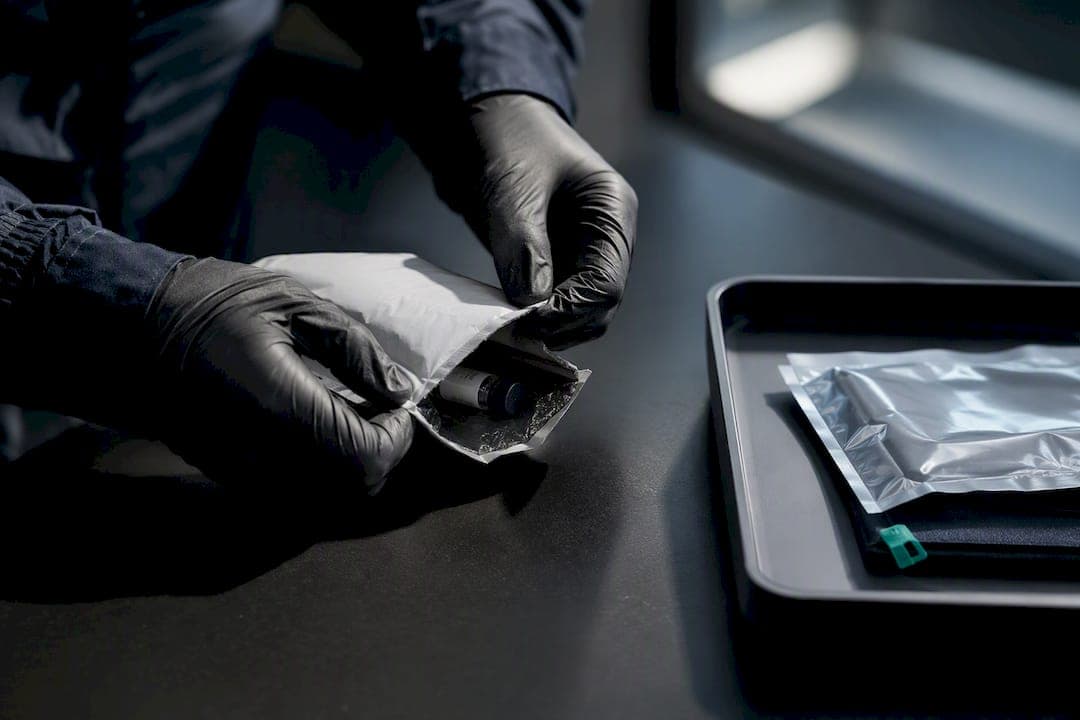
Unapproved research peptides generally cannot be lawfully imported into the United States for personal or human use. The Federal Food, Drug, and Cosmetic Act (FDCA) treats most peptides as unapproved new drugs, and the FDA's narrow personal importation discretion almost never applies to them. Two agencies control what crosses the border: the FDA decides whether a shipment is admissible as a drug, and U.S. Customs and Border Protection (CBP) physically enforces that decision, seizing noncompliant packages before they reach a lab or a doorstep.
TL;DR:
- Most peptide shipments are seized if they are consolidated in bulk cartons, mis-declared, or marketed for human therapeutic use despite an RUO label.
- Import alerts and high-volume online vendors frequently trigger FDA and CBP enforcement due to improper labeling, misleading marketing, or concealment.
- Personal importation policies rarely apply to peptides because they typically fail conditions such as documented medical need, short-term quantities, and the absence of commercial promotion.
- Lawful import requires active IND or research exemptions, verified supplier documentation, accurate customs filings, and proactive communication with authorities.
- Building a compliance routine with proper documentation, accurate shipping codes, and source verification significantly reduces seizure risk during importation.
Table of Contents
- Peptide Import Laws USA: The FDCA and FDA's Legal Framework
- CBP Enforcement and What Triggers a Seizure
- Does the FDA Personal Importation Policy Cover Peptides?
- Why This Policy Rarely Covers Peptide Shipments
- Compounding Rules: 503A, 503B, and the Bulks List
- How to Legally Import Peptides for Research
- Reducing Seizure Risk: A Practical Importer Checklist
- Documentation Tools That Support Compliance
- Enforcement Is Tightening: What Labs Should Do Now
- Sourcing Verified Peptides Without the Import Guesswork
- Where to Verify These Rules Yourself
- Sources
- FAQ
Peptide Import Laws USA: The FDCA and FDA's Legal Framework
The FDCA governs how the FDA treats peptides crossing into the United States, and the statute's language is broader than most importers expect. Under the FDCA, a "new drug" includes any compound intended to affect the structure or function of the body that lacks FDA approval, and most research peptides, from BPC-157 to various growth hormone secretagogues, fall squarely into that category. Biologics face a parallel framework under the Public Health Service Act, but the practical effect is the same: without an approved application or a valid research exemption, the product is not legally importable for use in or on a person.
FDA's own guidance on importing human drugs and its published import alerts spell out how the agency screens incoming shipments. The Import Alert 66-57 database lists categories of products FDA has flagged for automatic detention, and unapproved injectable peptides frequently appear on these watch lists.
FDA generally admits a shipment when it is tied to an active Investigational New Drug (IND) application, a registered research institution, or another documented legal exemption. It refuses admission when:
- The product is an unapproved new drug with no IND or valid exemption on file
- Labeling or accompanying marketing suggests human therapeutic use
- The shipment lacks accurate identification of contents, sender, or intended use
- The product appears on an active import alert for that compound class
CBP Enforcement and What Triggers a Seizure
CBP does the physical work of stopping shipments, and it coordinates closely with FDA once a package is flagged. Officers rely on a mix of manifest data, package profiling, and referrals from FDA's import alert system to decide which shipments get pulled for inspection. The tell that most often gives away an unlawful peptide shipment is structural, not chemical: a single "master carton" packed with dozens of small parcels, each pre-labeled for a different individual recipient inside the United States.
Between December 2025 and March 2026, CBP officers in Cincinnati intercepted roughly 5,000 individual peptide shipments concealed inside mis-manifested master cartons.
That single enforcement action illustrates the pattern regulators now watch for nationwide:
- Consolidated shipments that hide individually addressed packages inside one bulk declaration
- Commercial invoices that understate contents or omit the peptide's actual identity
- Vendors shipping repeat volumes to residential addresses rather than registered labs
Legal analysts note that mis-declaration or concealment alone can justify seizure, even without a separate finding that the compound itself is a controlled substance. The importer of record carries that liability, regardless of who packed the carton overseas.
Does the FDA Personal Importation Policy Cover Peptides?
FDA does maintain a discretionary personal importation policy, but it was built for a narrow set of circumstances that rarely describe peptide purchases. Under this policy, FDA may decline to act against an individual bringing in an unapproved drug only when several conditions are met at once.
- The product treats a serious condition for which no adequate domestic treatment exists
- There is no commercial promotion or solicitation of the product to U.S. residents
- The product does not represent an unreasonable safety risk
- The individual provides a written statement affirming the drug is for personal use, usually along with the name and address of a treating doctor
- The quantity generally does not exceed a 90-day supply
FDA reviewers look for concrete documentation, not a verbal assurance. That typically means a doctor's name and contact information, a written statement continuing an existing treatment plan already started abroad, and a quantity that matches a personal, short-term course rather than a bulk order. Reading the official personal importation page directly is worth the ten minutes it takes, because the criteria are stated in the agency's own words rather than paraphrased on a vendor's marketing page.
Why This Policy Rarely Covers Peptide Shipments
Peptides fail this test on almost every prong, and the reason has less to do with the molecule and more to do with how it is marketed. FDA's enforcement teams apply what attorneys call a "net-impression" standard: they look at the whole commercial picture around a product, not just the label printed on the vial.
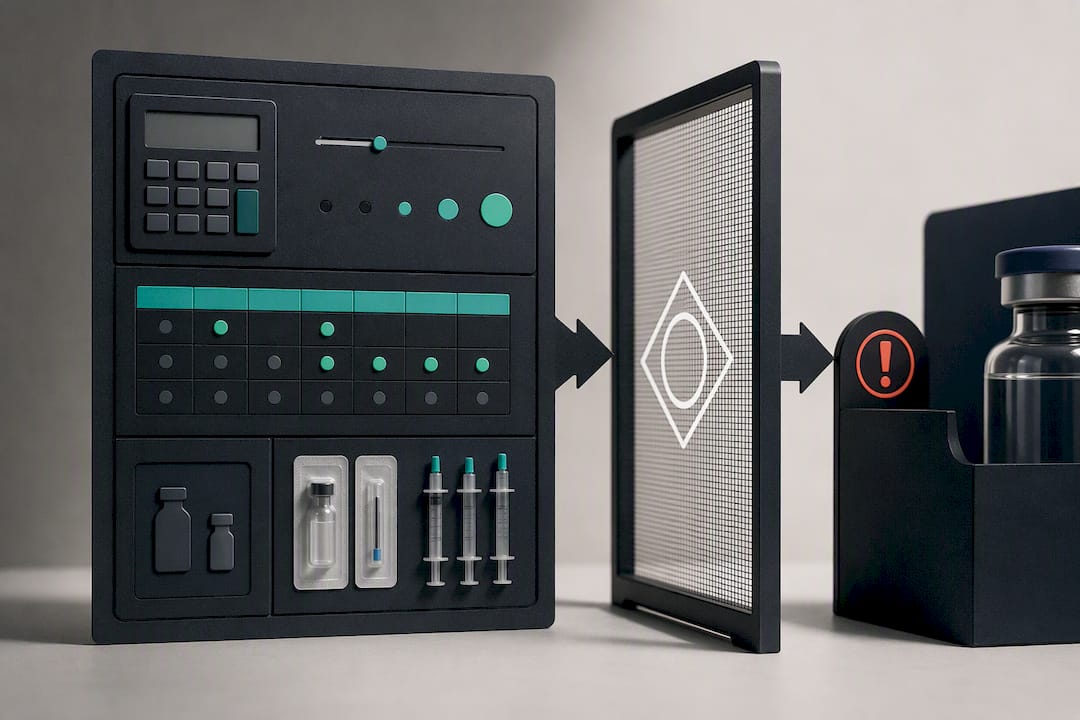
- A "Research Use Only" disclaimer carries little weight when the same website sells dosing calculators, bacteriostatic water, and reconstitution guides alongside the peptide
- Domestic availability of comparable research compounds undermines any claim that "no adequate treatment" exists in the United States
- Marketing language describing anti-aging, weight loss, or muscle-building outcomes signals human use regardless of the RUO label attached to the product
FDA Warning Letters issued to online peptide vendors have repeatedly cited this exact pattern: technically labeled research compounds sold alongside consumer-facing dosing tools and disease-related claims. Five vendors learned this the hard way when investigators concluded that RUO language does not override the surrounding marketing context.
Pro Tip: If your supplier's website includes a dosing calculator, injection frequency chart, or bundled reconstitution supplies next to the peptide listing, treat that as a signal the shipment could draw the same net-impression scrutiny that produced recent warning letters, regardless of the label on the vial itself.
Compounding Rules: 503A, 503B, and the Bulks List
Compounding law shapes a second, less obvious layer of peptide legality, and it directly affects how much pressure exists to import in the first place. Section 503A of the FDCA covers traditional compounding pharmacies that prepare patient-specific prescriptions, while 503B covers larger "outsourcing facilities" that compound in bulk under stricter current good manufacturing practice standards. Both categories can only use bulk drug substances that appear on FDA's approved bulks list, or that meet other narrow statutory criteria.
- 503A pharmacies: Compound for individual patients with a valid prescription, subject to state board oversight plus federal bulks-list restrictions
- 503B outsourcing facilities: Compound in larger batches without patient-specific prescriptions, registered directly with FDA and inspected more like manufacturers
- Bulks list status: A substance not on the list generally cannot be used in compounding, which pushes demand toward importation as a workaround
The Pharmacy Compounding Advisory Committee (PCAC) has reviewed multiple peptides for possible bulks-list inclusion. An advisory recommendation is a procedural milestone, not a change in law. Formal rulemaking still has to follow, and that process can take a year or more before a compound is actually addable to compounded prescriptions nationwide. An analysis of PCAC's July 2026 review of six research peptides walks through what that timeline means for labs weighing domestic sourcing against import risk.
How to Legally Import Peptides for Research
Institutional and commercial researchers have real, lawful pathways into the United States. They just require paperwork that most individual buyers never assemble.
- Determine whether you need an Investigational New Drug (IND) application. Any study involving human subjects or intended for eventual clinical use typically requires an active IND before importation. Pure in vitro or animal research may qualify for a different research exemption, but confirm this with regulatory counsel before shipping.
- Assemble institutional documentation. This includes your Institutional Review Board (IRB) or Institutional Biosafety Committee (IBC) approval letter, sponsor documentation if the research is externally funded, and a signed statement of intended use tied to your registered laboratory.
- Secure a verified Certificate of Analysis (COA) from the supplier. The COA should list purity, identity testing method, and the testing lab's accreditation, ideally ISO 17025.
- Confirm the foreign establishment is registered where required. Some import categories require the overseas manufacturer to have a valid FDA establishment registration on file.
- File accurate prior notice and customs entry documentation. Commercial invoices should state the compound's actual identity, quantity, and intended research use in plain language, never a vague or generic product description.
- Communicate proactively with CBP and FDA before the shipment moves. A short advance email or phone call to the port of entry, referencing your IND number or institutional registration, can prevent an automatic hold.
Reducing Seizure Risk: A Practical Importer Checklist
Most seizures trace back to paperwork problems rather than the chemistry of the compound itself. Tightening these five areas cuts your exposure substantially.
- Use accurate Harmonized System (HS) codes and detailed commercial invoices. Vague descriptions like "research chemical" invite closer inspection; specific compound names paired with COA references do not.
- Never let a supplier consolidate your order into an unmarked master carton with other buyers' shipments. This is the single pattern CBP has flagged most consistently in recent enforcement sweeps.
- Vet your freight forwarder's experience with pharmaceutical or biological imports. A forwarder unfamiliar with FDA-regulated products can mis-file entry paperwork without realizing the consequences.
- Keep a COA and supplier documentation file for every shipment, retrievable within hours, not days. USAPeptide's six-point COA checklist for lab sourcing outlines what a legitimate COA should include before you ever place an order.
- If a shipment is detained, contact your customs broker and legal counsel immediately, and do not discard any paperwork. Detained shipments often come with a narrow response window, and incomplete records make release far less likely.
Pro Tip: Photograph and date-stamp your COA and invoice paperwork the moment a shipment ships, not after it's flagged. A detention notice from CBP typically gives importers a short window to respond, and scrambling to locate documentation after the fact is the single most common reason legitimate research shipments get abandoned instead of released.
Documentation Tools That Support Compliance
Sound compliance starts with knowing exactly what you're buying and being able to prove it on demand. A certain reference platform was built around that need, offering researchers a way to check supplier claims before a shipment ever gets flagged at the border.
- A COA grading tool that assesses whether a Certificate of Analysis reflects legitimate third-party testing or contains red flags common to fabricated documents
- A peptide dosage calculator built for research-context reference, separate from any consumer-facing marketing
- Molecular profiles and mechanism-of-action summaries cross-referenced against peer-reviewed research for compounds like BPC-157, Semaglutide, and Tirzepatide
- Sourcing guidance pointing toward suppliers offering ISO 17025-accredited, ≥99% HPLC purity testing with verifiable identity documentation
Traceable documentation does more than satisfy an internal quality standard. A verified COA, tied to an accredited lab and a named supplier, is the exact kind of paper trail that supports admissibility when customs officials ask what's actually inside a package. Labs building a compliance file can start with the peptide sourcing and COA guide or browse full molecular reference profiles for terminology used throughout FDA and CBP guidance documents.
Enforcement Is Tightening: What Labs Should Do Now
Federal agencies are no longer treating online peptide vendors and individual importers as separate enforcement problems. The Cincinnati seizure, expanding warning letter activity, and PCAC's bulks-list review are pieces of one coordinated push across manufacturers, compounders, and importers alike.
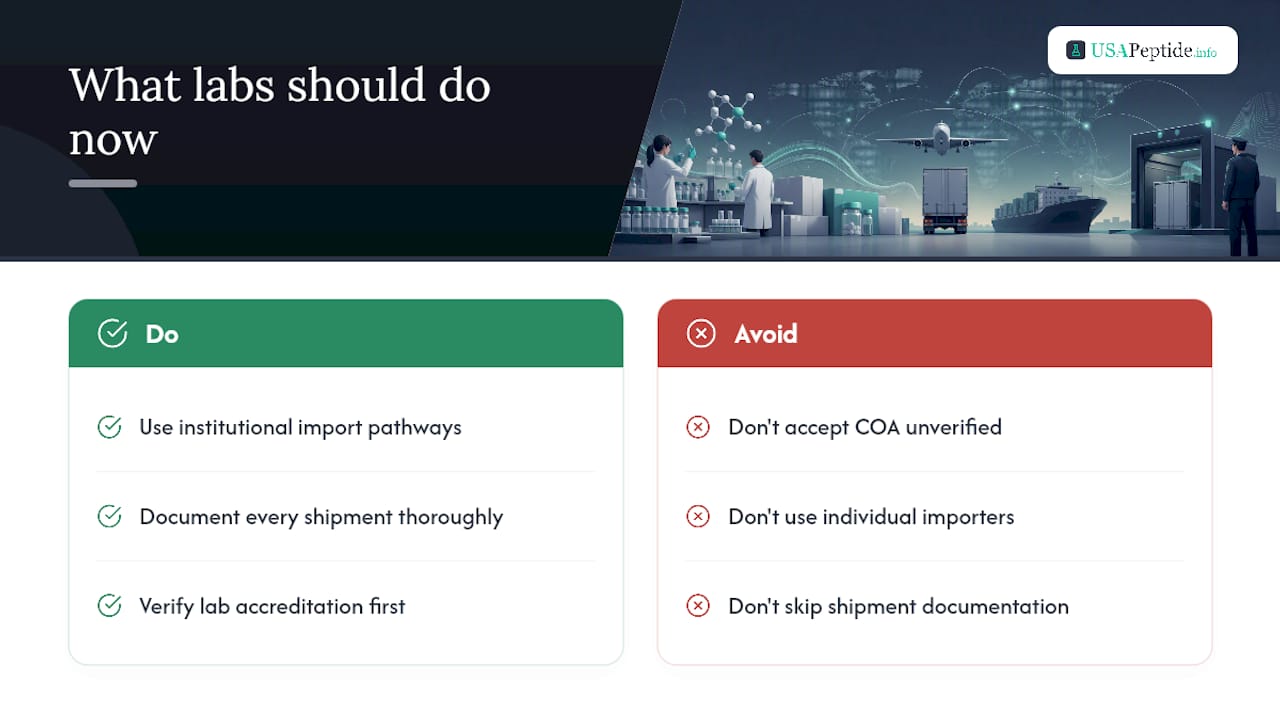
Our recommendation is straightforward: route imports through institutional pathways whenever possible, document every shipment as though a customs officer will ask for it tomorrow, and never accept a COA at face value without checking the testing lab's accreditation. Compliance-focused labs that build this habit now will spend far less time explaining a detained shipment later.
— USAPeptide Team
Sourcing Verified Peptides Without the Import Guesswork
Importing directly from an overseas supplier puts the paperwork burden, the customs risk, and the COA verification entirely on you. One platform offers qualified U.S.

The platform's research-grade peptide categories, spanning GLP-1 and metabolic peptides, tissue and connective repair compounds, and growth hormone peptides, are organized for qualified research institutions rather than casual consumer buyers. Before your next order, run the supplier's COA through the grading tool, cross-check the compound's molecular profile, and browse the fat loss research category or related pages to see documentation standards in practice. If your lab needs sourcing that skips the mis-manifested master carton risk entirely, start with a verified supplier network available today.
Where to Verify These Rules Yourself
- FDA Personal Importation Policy — the official criteria for discretionary admission
- CBP Cincinnati Enforcement Release — real seizure data and shipping red flags
- FDA Bulk Drug Substances / Bulks List — current compounding eligibility
- PCAC Meeting Materials — advisory committee proceedings and timelines
This article is general information, not a substitute for advice from a qualified doctor. Consult a qualified healthcare professional about your own circumstances before acting on anything here.
Sources
- Personal Importation | FDA
- Cincinnati CBP foils scheme to smuggle over 5,000 unapproved peptides into the U.S. | U.S. Customs and Border Protection
- Advisory committee calendar — Pharmacy Compounding Advisory Committee meeting materials | FDA
FAQ
Is It Legal to Import Peptides Into the USA?
Generally, no, not for human use, since unapproved peptides are treated as unapproved new drugs under the FDCA. Narrow exceptions exist through the FDA personal importation policy or through formal research pathways like an active IND application.
Can I Use the FDA Personal Importation Policy for Research Peptides?
Rarely, because the policy requires a serious condition with no domestic treatment, no commercial promotion, and a doctor's documented involvement. Most peptide purchases fail these conditions since comparable research compounds are already available domestically.
What Triggers a CBP Seizure of Peptide Shipments?
Mis-manifested master cartons containing multiple unmarked individual packages are the most common trigger, as seen in the Cincinnati enforcement action that intercepted roughly 5,000 shipments. Inaccurate commercial invoices and labeling that implies human therapeutic use also draw inspection.
Does a "Research Use Only" Label Protect an Import Shipment?
Not on its own. FDA applies a net-impression standard, meaning dosing calculators, bacteriostatic water, and disease-related marketing alongside an RUO label can still trigger enforcement action.
How Can USAPeptide Help With Import Compliance?
USAPeptide offers a COA grading tool, molecular reference data, and sourcing guidance that help researchers verify supplier documentation before ordering. Current pricing and category details are available directly on the USAPeptide site.