
Tirzepatide produces the largest average weight reductions reported in any randomized obesity drug trial to date, with dose-dependent effects reaching a mean of −20.9% at a duration of roughly about 72 weeks in the phase 3 SURMOUNT‑1 trial, against −3.1% for placebo. In type 2 diabetes populations, the SURPASS program has shown HbA1c reductions of up to roughly −2.3 percentage points at the highest doses studied, outperforming several comparator classes on glycemic control.
The evidence base rests on large, randomized, double-blind phase 3 trials with pre-registered NCT identifiers and prespecified primary endpoints, plus at least one systematic review and meta-analysis that pooled results across studies and confirmed superiority over comparators for weight outcomes. That review, along with individual trial reports, flags gastrointestinal adverse events, primarily nausea, diarrhea, and decreased appetite, as the dominant safety signal, concentrated heavily in the dose-escalation window.
For researchers scanning the tirzepatide research landscape, three numbers matter most going in:
- Weight loss magnitude: mean reductions of 15–20.9% at maximum studied doses over a duration of roughly about 72 weeks, versus roughly 3% for placebo.
- Glycemic effect: HbA1c reductions approaching 2 percentage points in T2D populations across the SURPASS series.
- Safety profile: gastrointestinal events in many participants across doses, with rates in the range of 25 to 37 percent reported source, with discontinuation rates that rise modestly at higher doses but remain a minority of randomized participants.
This is a dual GIP/GLP‑1 receptor agonist, not a simple GLP‑1 analog, and that mechanistic distinction explains much of the effect-size gap seen against older incretin-based therapies. The sections below walk through the trial-by-trial numbers, the pharmacology, the safety data, the comparative evidence against semaglutide, and the ongoing studies that will determine whether these effects translate into hard cardiovascular outcomes.
Key Takeaways
| Point | Details |
|---|---|
| Peak efficacy | SURMOUNT‑1 reported −20.9% mean weight change at 15 mg over a duration of roughly about 72 weeks, versus −3.1% with placebo. |
| Glycemic effect | SURPASS trials showed HbA1c reductions up to roughly −2.3 percentage points at higher doses. |
| Dominant safety signal | Gastrointestinal events occurred in an estimated 25–37% of participants, concentrated during dose escalation. |
| Durability depends on continuation | SURMOUNT‑4 found continued treatment preserves weight loss, while placebo switching causes regain. |
| Verify before you source | USAPeptide's COA grading tool and tirzepatide reference page help researchers confirm compound identity and purity before designing a study. |
Table of Contents
- What Do the Major Tirzepatide Clinical Trials Show?
- How Does Tirzepatide's Dual Mechanism Drive These Effects?
- What Are the Main Safety Signals in Tirzepatide Trials?
- How Does Tirzepatide Compare With Semaglutide?
- Does the Weight Loss Hold Up After Stopping Treatment?
- What Ongoing Trials Will Shape Future Tirzepatide Research?
- What Are the Limits of the Current Tirzepatide Evidence?
- Which USAPeptide Resources Support Tirzepatide Research Workflows?
- What Should Future Tirzepatide Trials Prioritize?
- How USAPeptide Supports Tirzepatide Research Planning
- Frequently Asked Questions About Tirzepatide Research
- Sources
What Do the Major Tirzepatide Clinical Trials Show?
Tirzepatide (Eli Lilly's LY3298176) has been studied across two parallel phase 2/3 programs: SURPASS, focused on type 2 diabetes, and SURMOUNT, focused on obesity and weight-related comorbidities in people with and without diabetes. Each program includes multiple named trials with distinct populations, dosing schedules, and endpoints, and reading them as a set is the fastest way to understand where the drug's effects are strongest and where the evidence still has gaps.
SURMOUNT‑1: the foundational obesity trial
SURMOUNT‑1 enrolled adults with obesity or overweight with at least one weight-related comorbidity, excluding diabetes, and randomized them to tirzepatide 5 mg, 10 mg, or 15 mg weekly, or placebo, over a duration of roughly about 72 weeks. The trial used a dose-escalation schedule starting at 2.5 mg weekly and increasing every four weeks until the target maintenance dose was reached.
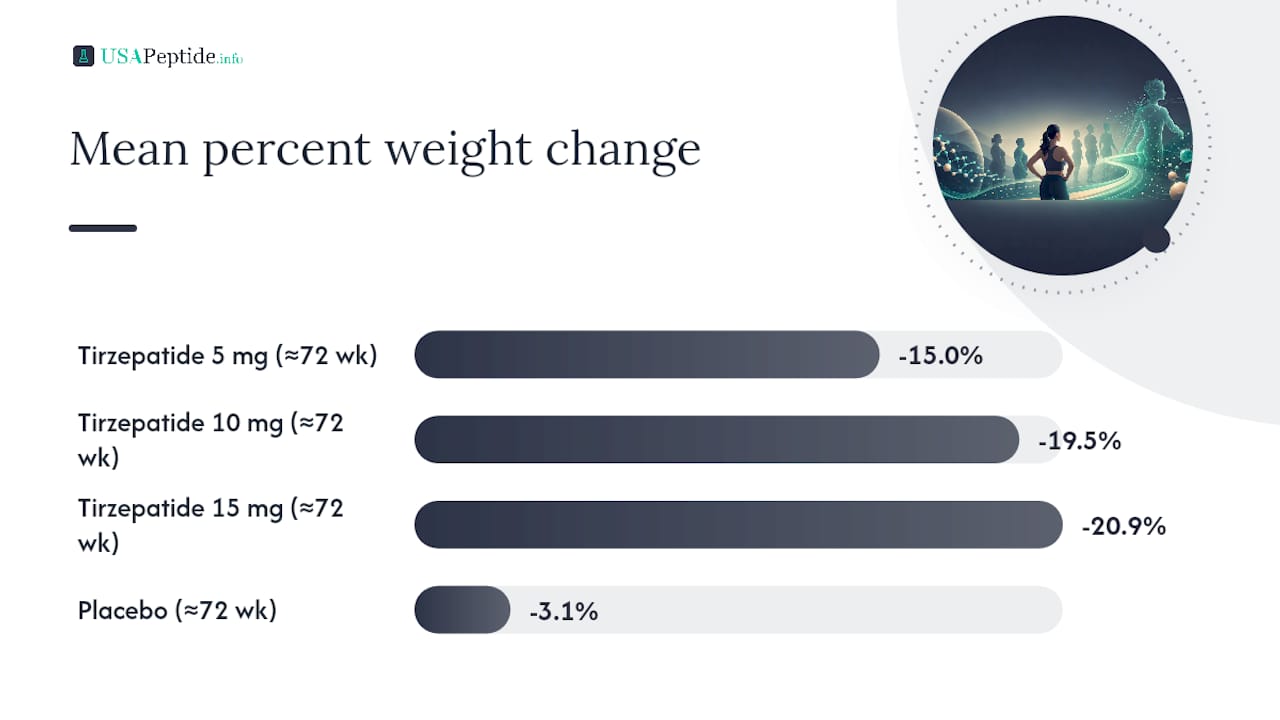
The headline results: mean percent weight change at a duration of roughly about 72 weeks was −15.0% at 5 mg, −19.5% at 10 mg, and −20.9% at 15 mg, compared with −3.1% with placebo. A high proportion of participants on the higher doses reached the ≥5%, ≥10%, and ≥15% weight-loss thresholds that regulators and researchers use as clinically meaningful cutoffs. Adverse events, mostly gastrointestinal, clustered during the first roughly 20 weeks, which corresponds to the dose-escalation phase rather than the maintenance period.
SURPASS series: glycemic control in type 2 diabetes
The SURPASS trials tested tirzepatide specifically in people with type 2 diabetes, often against active comparators rather than placebo alone. SURPASS‑5, for instance, evaluated tirzepatide against placebo in patients whose diabetes was inadequately controlled on insulin glargine, a common and clinically demanding population because background insulin raises hypoglycemia risk. Across the SURPASS program, dose-dependent HbA1c reductions reached approximately 2 percentage points at higher doses in some trials, with weight loss differences measured in kilograms rather than percentages, since the diabetes trials generally report absolute weight change alongside glycemic outcomes.
Severe hypoglycemia rates stayed low across SURPASS trials except when tirzepatide was combined with insulin or sulfonylureas, a predictable interaction given how those background therapies already lower blood glucose independently.
SURMOUNT‑4: maintenance and discontinuation design
SURMOUNT‑4 used a different architecture than the other SURMOUNT trials. All participants first received open-label tirzepatide for a 36-week lead-in period to reach the maximum tolerated dose. Only then were they randomized, either to continue tirzepatide or switch to placebo, for a further 52-week maintenance phase. This lead-in-then-randomize design isolates the effect of continued therapy from the effect of initial dose escalation, and it produced one of the more clinically important findings in the entire program: participants who continued tirzepatide maintained their weight loss, while those switched to placebo regained a substantial portion of it.
SURMOUNT‑5: the head-to-head comparator trial
SURMOUNT‑5 is a phase 3b trial directly comparing tirzepatide, escalated to 15 mg or the maximum tolerated dose, against semaglutide 2.4 mg or its own maximum tolerated dose, in adults with obesity or overweight and weight-related comorbidities. The trial runs over roughly a duration of roughly a duration of roughly about 72 weeks and reports percent weight change as a secondary endpoint comparing the two active drugs directly, rather than against placebo. This is one of the few trials in the field designed as a genuine head-to-head between GIP/GLP‑1 dual agonism and GLP‑1 monoagonism, using matched dose-escalation logic on both arms.
A few design details change how you should read these numbers. SURMOUNT‑1 and similar trials generally report a "treatment-regimen" estimand, meaning outcomes reflect intention-to-treat regardless of whether participants stayed on their assigned dose for the full duration, which tends to produce more conservative effect estimates than an "efficacy" estimand that only counts adherent participants. SURMOUNT‑4's lead-in phase means its maintenance-period numbers already reflect participants who tolerated and responded to tirzepatide, a form of selection that should temper direct comparison with placebo-controlled trials that randomize from baseline.
Key numbers worth remembering from the SURMOUNT/SURPASS programs:
- SURMOUNT‑1: −20.9% mean weight change at 15 mg over a duration of roughly about 72 weeks, versus −3.1% placebo.
- SURPASS trials: HbA1c reductions up to roughly −2.3 percentage points at higher doses.
- SURMOUNT‑4: continued therapy preserves weight loss; placebo switch produces regain during the 52-week maintenance phase.
- SURMOUNT‑5: first major trial to compare tirzepatide 15 mg/MTD directly against semaglutide 2.4 mg/MTD on weight outcomes.
How Does Tirzepatide's Dual Mechanism Drive These Effects?
Tirzepatide's core pharmacological distinction is dual agonism at both the glucose-dependent insulinotropic polypeptide (GIP) receptor and the glucagon-like peptide-1 (GLP‑1) receptor. Earlier incretin therapies target GLP‑1 alone; tirzepatide's addition of GIP receptor activity is the mechanistic explanation researchers point to for its larger observed effect sizes on weight and glycemic control compared with GLP‑1 monoagonists, according to the clinical overview in StatPearls.
GIP receptor agonism appears to enhance insulin secretion in a glucose-dependent manner and may improve adipose tissue metabolism in ways that complement GLP‑1's effects on appetite suppression and gastric emptying. The combined action on two incretin pathways rather than one is the leading explanation for why tirzepatide's weight-loss curves separate from GLP‑1-only comparators in trials like SURMOUNT‑5, though the precise contribution of each receptor pathway to the overall effect remains an active area of mechanistic study.
Tirzepatide's pharmacokinetics support once-weekly dosing, with a half-life long enough to maintain steady plasma concentrations between injections. This PK profile is why trial protocols use gradual dose escalation, typically starting at 2.5 mg weekly and increasing at four-week intervals, rather than starting at the maximum tolerated dose. The escalation schedule exists specifically to let the gastrointestinal system adapt before reaching higher, more effective doses.
Beyond weight and HbA1c, trial data document metabolic effects that extend into cardiometabolic territory. The three-year follow-up to SURMOUNT‑1 found a markedly lower incidence of progression to type 2 diabetes among participants with prediabetes at baseline, compared with placebo. Separately, cardiometabolic data from heart failure populations found that tirzepatide improved composite clinical outcomes in patients with heart failure with preserved ejection fraction and obesity, including reduced worsening heart failure events and improved patient-reported symptom scores.
Metabolic endpoints worth prioritizing in future mechanistic substudies:
- Lipid panel changes (LDL, triglycerides, HDL) stratified by dose and baseline metabolic status.
- Blood pressure trajectories during dose escalation versus maintenance.
- Beta-cell function markers (HOMA-B or equivalent) in prediabetic and diabetic subgroups.
- Insulin sensitivity indices before and after sustained weight loss, to separate direct pharmacologic effects from weight-mediated effects.
Pro Tip: When designing a translational substudy, plan biomarker collection around the dose-escalation window specifically. Since GI tolerability issues and early metabolic shifts both concentrate in the first 20 weeks, sampling only at trial end will miss the dynamics that explain individual variation in response.
What Are the Main Safety Signals in Tirzepatide Trials?
Gastrointestinal adverse events dominate the tirzepatide safety profile across every major trial. One analysis of the SURPASS‑CN‑INS dataset reported gastrointestinal events, primarily diarrhea and decreased appetite, in a significant subset of participants depending on dose, with rates reported between about 25 and 37 percent source, with the highest rates at higher maintenance doses. These events are not evenly distributed across the trial timeline: they cluster heavily during the dose-escalation period, generally the first 20 weeks, and taper substantially once participants reach a stable maintenance dose.

This timing pattern has direct implications for trial design and clinical monitoring. Investigators running new tirzepatide studies should weight adverse-event capture toward the early titration window rather than assuming a flat event rate across the study duration. The systematic review pooling safety data across multiple RCTs confirms GI events as the most consistent safety signal in the pooled dataset, reinforcing that this is not an artifact of any single trial's population or design.
Discontinuation due to adverse events increases modestly with dose but remains a minority outcome across the SURMOUNT and SURPASS trials; most participants who experience GI symptoms during escalation continue treatment once symptoms subside. Serious adverse events, meaning those requiring hospitalization or classified as life-threatening, occur at low and generally comparable rates between tirzepatide and comparator arms, without a distinct tirzepatide-specific serious event pattern emerging across the published trials.
Hypoglycemia risk depends heavily on background therapy. In SURPASS trials enrolling participants on insulin or sulfonylureas, severe hypoglycemia incidence rises compared with tirzepatide monotherapy trials, a pharmacologically expected interaction rather than an independent tirzepatide effect. Trials that excluded background insulin, such as most SURMOUNT studies in non-diabetic populations, report minimal hypoglycemia.
Practical monitoring considerations for investigators:
- Front-load adverse-event capture windows to the first 20 weeks, where GI events concentrate.
- Use a slower titration schedule for participants reporting early GI symptoms rather than defaulting to a fixed escalation timeline.
- Flag any co-administered insulin or sulfonylurea explicitly in the protocol, given the compounded hypoglycemia risk.
- Track discontinuation reasons separately from dose reduction, since the two outcomes carry different implications for tolerability data.
Pro Tip: If you're planning a preclinical or early-phase protocol, budget for a longer screening and titration period than you might for a GLP‑1 monoagonist. The dual-receptor mechanism doesn't just change efficacy; it changes the tolerability curve investigators need to plan around.
How Does Tirzepatide Compare With Semaglutide?
The clearest comparative data comes from SURMOUNT‑5, the phase 3b trial directly randomizing participants to tirzepatide (escalated to 15 mg or MTD) or semaglutide (2.4 mg or MTD) over roughly a duration of roughly a duration of roughly about 72 weeks. This head-to-head design matters because most comparisons in the obesity drug field rely on indirect, cross-trial comparisons rather than randomizing the same population to both drugs under identical conditions.
Outside of SURMOUNT‑5's direct comparison, most comparative evidence is indirect. The pooled systematic review found tirzepatide more effective than comparators, including GLP‑1 monoagonists, for weight loss across randomized trials, though cross-trial comparisons carry the usual caveats: differing baseline populations, follow-up durations, and outcome measurement methods can all inflate or dampen apparent differences that a true head-to-head would resolve.

On glycemic control, the SURPASS program's HbA1c reductions of up to roughly 2 percentage points at higher doses compare favorably against published GLP‑1 monoagonist trials in similar diabetes populations, though again, most of these comparisons are indirect rather than randomized within the same trial.
Safety trade-offs between the two drug classes look broadly similar on the surface, gastrointestinal events dominate both, but the magnitude and dose-response curve differ. Open-label design in some comparator studies, plus differing dose-escalation schedules between tirzepatide and semaglutide protocols, complicates direct rate comparisons outside of trials like SURMOUNT‑5 that standardize escalation logic across both arms.
| Comparison dimension | Tirzepatide (SURMOUNT‑1/5) | Semaglutide (comparator context) |
|---|---|---|
| Primary endpoint | Percent weight change, ≥5/10/15% thresholds | Percent weight change (comparator arm in SURMOUNT‑5) |
| Population | Obesity/overweight, with/without T2D across trials | Obesity/overweight, matched in SURMOUNT‑5 |
| Dosing regimen | Escalation to 15 mg or MTD, weekly | Escalation to 2.4 mg or MTD, weekly |
| Follow-up duration | a duration of roughly about 72 weeks (SURMOUNT‑1 and SURMOUNT‑5) | a duration of roughly about 72 weeks (within SURMOUNT‑5) |
| Safety profile | GI events dominant, dose-escalation window | GI events dominant, similar pattern reported in comparator literature |
What this means for interpreting comparative claims:
- Treat any tirzepatide-versus-semaglutide efficacy claim outside SURMOUNT‑5 as indirect evidence, not a randomized comparison.
- Weigh pooled systematic review estimates as directional signals, not precise effect-size differences, given cross-trial heterogeneity.
- Expect GI event rates to look similar between the two drug classes in absolute terms, with dose-escalation timing as the shared driver.
For a deeper look at GLP‑1 monoagonist pharmacology and how it contrasts mechanistically with dual agonism, the semaglutide reference profile breaks down the receptor biology side by side.
Does the Weight Loss Hold Up After Stopping Treatment?
The three-year follow-up to SURMOUNT‑1 found sustained weight reductions ranging from approximately −12.3% to −19.7% across doses at 176 weeks, alongside a markedly lower incidence of progression to type 2 diabetes among participants with prediabetes at baseline compared with those on placebo. That durability data is one of the strongest arguments for tirzepatide's role as a long-term metabolic therapy rather than a short-course intervention.
But durability depends heavily on continued treatment. SURMOUNT‑4's lead-in-then-randomize design isolated exactly this question: after 36 weeks of open-label tirzepatide to reach maximum tolerated dose, participants randomized to continue treatment maintained their weight loss through the 52-week maintenance phase, while those randomized to placebo experienced meaningful weight regain. Separate analysis of maintenance-phase trial designs reinforces that continued treatment at the maximum tolerated dose is the more reliable strategy for sustaining results, with dose reduction or discontinuation commonly followed by regain.
For protocol designers, this has concrete implications. Maintenance studies need a comparator arm that captures the discontinuation effect specifically, rather than assuming that trial-end weight measurements reflect a stable, durable state. Selecting semaglutide or another active comparator, as SURMOUNT‑5 does, adds useful context, but the placebo-withdrawal design used in SURMOUNT‑4 remains the cleanest way to isolate the pure effect of continued dosing.
Durability data points worth citing precisely:
- 176-week weight change: approximately −12.3% to −19.7% across doses, versus placebo.
- SURMOUNT‑4 maintenance phase: continued tirzepatide preserves weight loss; placebo switch produces regain.
- Progression to type 2 diabetes in prediabetic participants: markedly reduced with continued tirzepatide versus placebo over three years.
What Ongoing Trials Will Shape Future Tirzepatide Research?
The current evidence base is strong on weight and glycemic surrogate endpoints but thin on hard clinical outcomes, particularly cardiovascular mortality and morbidity over multi-year horizons. Several active trials are designed specifically to close that gap.
SURMOUNT‑MMO is the trial to watch for hard outcomes. It's a large phase 3 morbidity and mortality trial enrolling a large number of participants with obesity, over 15,000 as reported, randomized double-blind, assessing a composite of all-cause death and major cardiovascular events, with primary completion expected around 2027. This is the study that will determine whether tirzepatide's metabolic benefits translate into reduced cardiovascular death, the outcome regulators and clinicians ultimately care most about.
SURMOUNT‑5, already underway, continues to generate secondary comparative data against semaglutide as follow-up extends. Additional registry entries and planned trials in earlier disease stages, sometimes grouped informally under a "SURPASS‑EARLY" framing in trial-tracking discussions, aim to test whether earlier intervention in prediabetes or early T2D changes the long-term trajectory more than intervention after diabetes is established.
| Trial | NCT ID | Primary aim | Estimated scale | Expected timing |
|---|---|---|---|---|
| SURMOUNT‑MMO | NCT05556512 | Composite death/major CV events | ~a population exceeding 15,000 participants | Primary completion ~2027 |
| SURMOUNT‑5 | NCT05822830 | Head-to-head vs semaglutide | Phase 3b scale | Ongoing, secondary endpoints maturing |
| SURMOUNT‑4 | NCT04660643 | Maintenance vs discontinuation | Phase 3 scale | Completed, informs future maintenance designs |
Why these trials matter for the current evidence gap:
- SURMOUNT‑MMO is the first trial powered specifically for hard cardiovascular outcomes rather than surrogate weight and glycemic endpoints.
- SURMOUNT‑5's maturing data will eventually allow more confident head-to-head efficacy claims against semaglutide beyond the initial secondary endpoint reports.
- None of the currently completed major trials run long enough to fully answer cardiovascular mortality questions, which is precisely the gap SURMOUNT‑MMO is designed to fill.
You can track publication updates on these trials as they mature through the peptide research news feed, which follows major trial readouts relevant to metabolic peptide research.
What Are the Limits of the Current Tirzepatide Evidence?
No systematic review or single trial proves everything researchers eventually need to know, and reading the tirzepatide literature critically means understanding what the current designs can and cannot answer.
Estimand choice matters more than most non-methodologists appreciate. Trials using a treatment-regimen estimand, which counts outcomes regardless of adherence, tend to report more conservative effect sizes than trials using an efficacy estimand that only counts on-treatment participants. Comparing headline numbers across trials without checking which estimand was used risks overstating or understating true effect differences. Lead-in phases, like the one in SURMOUNT‑4, also introduce selection: participants who tolerate and respond during an open-label run-in are not the same population as one randomized from the start.
External validity carries its own limits. Most major trials excluded participants with advanced kidney disease, meaning the safety and efficacy data don't directly generalize to that population, a meaningful gap given how common kidney disease is among people with obesity and type 2 diabetes. Follow-up duration is another constraint: even the longest published data, the 176-week SURMOUNT‑1 extension, falls short of the multi-year or decade-scale horizon needed to fully characterize cardiovascular mortality, which is exactly why SURMOUNT‑MMO exists.
Evidence gaps that remain open:
- Long-term cardiovascular mortality data beyond what SURMOUNT‑MMO will eventually provide.
- Real-world effectiveness data in populations broader than tightly controlled RCT enrollment criteria.
- Formal drug-drug interaction studies beyond the insulin and sulfonylureas already studied in SURPASS trials.
- Efficacy and safety data specific to advanced kidney disease populations, currently excluded from most major trials.
Which USAPeptide Resources Support Tirzepatide Research Workflows?
Verifying compound identity and purity is a prerequisite for any credible preclinical or translational study, and it's a step that gets skipped more often than researchers admit. USAPeptide's tirzepatide reference page consolidates molecular profile data, mechanism of action, and a curated list of the peer-reviewed trial literature covered above, giving researchers a single starting point before designing a substudy.
The platform's COA grading tool assesses whether a Certificate of Analysis meets the documentation standards researchers should expect, checking for the kind of verified purity and identity data that ISO 17025-accredited testing produces. For anyone planning a PK/PD substudy or a preclinical dose-response experiment, that verification step matters as much as the trial design itself, since underpowered or misidentified compound batches can undermine an otherwise sound protocol.
The dosage calculator supports research-dosing planning by translating target concentrations into practical reconstitution and administration parameters, useful when adapting published clinical dose-escalation schedules, like the 2.5 mg starting dose used across SURMOUNT and SURPASS trials, into a lab-appropriate research protocol.
Pro Tip: Before ordering a research batch, run its Certificate of Analysis through the COA grading tool and cross-check the reported purity against the ≥99% HPLC threshold used in most published trial-grade material. A batch that fails this check early saves far more time than discovering an identity problem mid-experiment.
What Should Future Tirzepatide Trials Prioritize?
The evidence gaps outlined above point to a clear research agenda. Cardiovascular outcome data from SURMOUNT‑MMO deserves the field's closest attention over the next several years, since it will finally answer whether metabolic improvements translate into fewer deaths and major cardiac events. Maintenance and discontinuation trials, building on SURMOUNT‑4's design, should expand to test different dose-reduction strategies rather than a binary continue-or-stop comparison.
Mechanistic biomarker studies, particularly beta-cell function and lipid trajectory data, remain underpowered relative to the weight and HbA1c endpoints that dominate current publications. And frankly, the field needs more trials in populations the pivotal studies excluded, especially advanced kidney disease, if tirzepatide's real-world footprint is going to match its trial-population results.
How USAPeptide Supports Tirzepatide Research Planning
Sourcing research-grade tirzepatide with confidence starts with verified documentation, not marketing claims. USAPeptide's platform gives researchers direct access to molecular profiles, mechanism data, and Certificate of Analysis verification in one place, rather than piecing that information together from scattered vendor pages.

The COA grading tool is built specifically for this problem: it assesses whether a supplier's Certificate of Analysis meets ISO 17025-accredited standards and reflects genuine ≥99% HPLC purity, so you're not relying on a vendor's own claims about identity and purity. That verification step is especially useful when planning translational or preclinical substudies, where an unverified compound batch can quietly compromise months of experimental work before anyone notices.
Pro Tip: Run every new supplier's COA through the grading tool before your first order, not after a batch arrives. It takes a few minutes and eliminates the single most common source of preclinical data problems in peptide research.
If you're planning your next tirzepatide study or need to source verified research-grade compound, start with the USAPeptide research peptide reference to review current molecular data and connect with vetted suppliers.
Frequently Asked Questions About Tirzepatide Research
What is the strongest clinical trial evidence behind tirzepatide research?
The strongest evidence comes from randomized, double-blind phase 3 trials, particularly SURMOUNT‑1, which reported dose-dependent weight reductions up to −20.9% at a duration of roughly a duration of roughly about 72 weeks, combined with a pooled systematic review confirming that effect across multiple studies.
How does tirzepatide's mechanism differ from GLP‑1 receptor agonists like semaglutide?
Tirzepatide activates both the GIP and GLP‑1 receptors, while semaglutide targets GLP‑1 alone. This dual mechanism is the leading explanation researchers cite for tirzepatide's larger observed weight-loss and glycemic effects in comparative data.
What are the most common adverse events in tirzepatide trials?
Gastrointestinal events, including nausea, diarrhea, and decreased appetite, are the most common adverse events, affecting an estimated 25% to 37% of participants depending on dose, mostly during the dose-escalation period.
Does weight loss persist after stopping tirzepatide?
Trial data suggest it does not persist reliably. SURMOUNT‑4 found that participants switched from tirzepatide to placebo during the maintenance phase experienced weight regain, while those who continued treatment maintained their results.
Are there ongoing trials studying tirzepatide's effect on cardiovascular outcomes?
Yes. SURMOUNT‑MMO is a large phase 3 trial enrolling over 15,000 participants to assess a composite of all-cause death and major cardiovascular events, with primary completion expected around 2027.
How does tirzepatide compare with semaglutide in head-to-head trials?
SURMOUNT‑5 is the primary head-to-head trial, comparing tirzepatide escalated to 15 mg or maximum tolerated dose against semaglutide 2.4 mg or its maximum tolerated dose, with percent weight change as a reported secondary outcome.
This article is general information, not a substitute for advice from a qualified doctor. Consult a qualified healthcare professional about your own circumstances before acting on anything here.
Sources
- Tirzepatide Once Weekly for the Treatment of Obesity | New England Journal of Medicine
- Weight loss efficiency and safety of tirzepatide: A Systematic review
- PubMed reference reporting GI adverse-event rates (SURPASS‑CN‑INS analysis)
- Tirzepatide - StatPearls - NCBI Bookshelf