
CJC-1295 is a synthetic, long-acting analog of growth hormone-releasing hormone (GHRH) whose drug affinity complex (DAC) modification produces multi-day GH and IGF-1 elevation in short-term human pharmacokinetic/pharmacodynamic studies. The DAC form binds covalently to serum albumin, extending its half-life to multiple days compared to roughly 30 minutes for the no-DAC form. Randomized, placebo-controlled trials in healthy adults reported dose-dependent GH increases of approximately 2–10× sustained for about 6 days and IGF-1 increases of approximately 1.5–3× sustained for about 9–11 days. Neither the DAC nor the no-DAC form holds FDA approval; both are classified as research compounds in the United States.
Key orientation points for investigators:
- Primary human evidence: Teichman et al. (J Clin Endocrinol Metab, 2006) — ascending-dose, double-blind, placebo-controlled trials in adults aged 21–61 years
- Pulsatility evidence: A pulsatility study (Ionescu & Frohman, 2006) demonstrating preserved GH pulse frequency with markedly elevated trough GH (~7.5-fold) after a single CJC-1295 injection
- DAC vs. no-DAC distinction: The DAC moiety determines half-life, dosing interval, and GH release pattern; these are operationally different compounds
- Evidence ceiling: No long-duration safety trials; no clinical-outcome (body composition, morbidity) data in humans; extrapolations from hormone-level changes remain unvalidated
Key Takeaways
CJC-1295 DAC reliably elevates GH and IGF-1 for days after a single dose in short-term human studies, but the evidence base lacks clinical-outcome trials and long-term safety data, making it a research compound with a narrow but well-characterized PK/PD record.
| Point | Details |
|---|---|
| DAC vs. no-DAC distinction | DAC half-life is multiple days; no-DAC is approximately 30 minutes, these are operationally different compounds requiring different dosing intervals. |
| Core PK/PD findings | GH increases ~2–10× for ~6 days; IGF-1 increases ~1.5–3× for ~9–11 days after a single subcutaneous dose. |
| Pulsatility preserved | Trough GH rose ~7.5-fold after one injection while pulse frequency and amplitude remained intact, distinguishing CJC-1295 from exogenous GH. |
| Safety and evidence gaps | No serious adverse events in short-term trials; no long-duration safety data, no clinical-outcome trials, and no data in special populations. |
| USAPeptide resources | USAPeptide provides COA verification tools, molecular profiles, and sourcing references for qualified U.S. researchers planning CJC-1295 studies. |
Table of Contents
- How does CJC-1295 work at the molecular level?
- What do human PK/PD studies report for CJC-1295?
- What do clinical trials show about CJC-1295 efficacy and safety?
- What adverse events and safety signals have been reported?
- Which research methods and biomarkers matter most for CJC-1295 studies?
- What is the U.S. regulatory and ethical context for CJC-1295 research?
- How should researchers approach sourcing, quality assurance, and dosing?
- The USAPeptide Team's perspective on CJC-1295 research
- Research-grade CJC-1295 resources from USAPeptide
- Sources
How does CJC-1295 work at the molecular level?
CJC-1295 shares its peptide backbone with GHRH(1–29), the endogenous hypothalamic peptide that stimulates pituitary somatotropes to release GH. The DAC modification appends a maleimido-propionic acid group that undergoes a Michael addition reaction with the free thiol of cysteine-34 on circulating serum albumin. Because albumin has a plasma half-life of roughly 19 days, the covalently bound CJC-1295 complex circulates far longer than the unmodified peptide. Albumin binding of at least ~90% after parenteral administration is the direct pharmacokinetic consequence of this chemistry.
The no-DAC form, also called mod-GRF(1–29), retains the same four amino acid substitutions that confer protease resistance but lacks the albumin-binding appendage. Its half-life remains approximately 30 minutes, producing a sharp, short-lived GH pulse rather than sustained receptor stimulation.
Downstream endocrine effects of GHRH receptor activation include:
- Increased GH secretion from anterior pituitary somatotropes via Gs-coupled cAMP signaling
- Hepatic IGF-1 synthesis driven by elevated GH, with a lag of several hours to days
- With the DAC form: elevated trough (basal) GH between pulses, while pulse frequency and amplitude remain intact
- With the no-DAC form: a discrete GH pulse resembling the physiologic pattern, often amplified further when co-administered with a GHRP such as ipamorelin or GHRP-6
A theoretical concern with continuous GHRH receptor stimulation is receptor desensitization or downregulation. Short-term trials did not show definitive evidence of desensitization over their study windows, but the question remains open because no long-duration human data exist. This is the central mechanistic uncertainty in current CJC-1295 research.
What do human PK/PD studies report for CJC-1295?
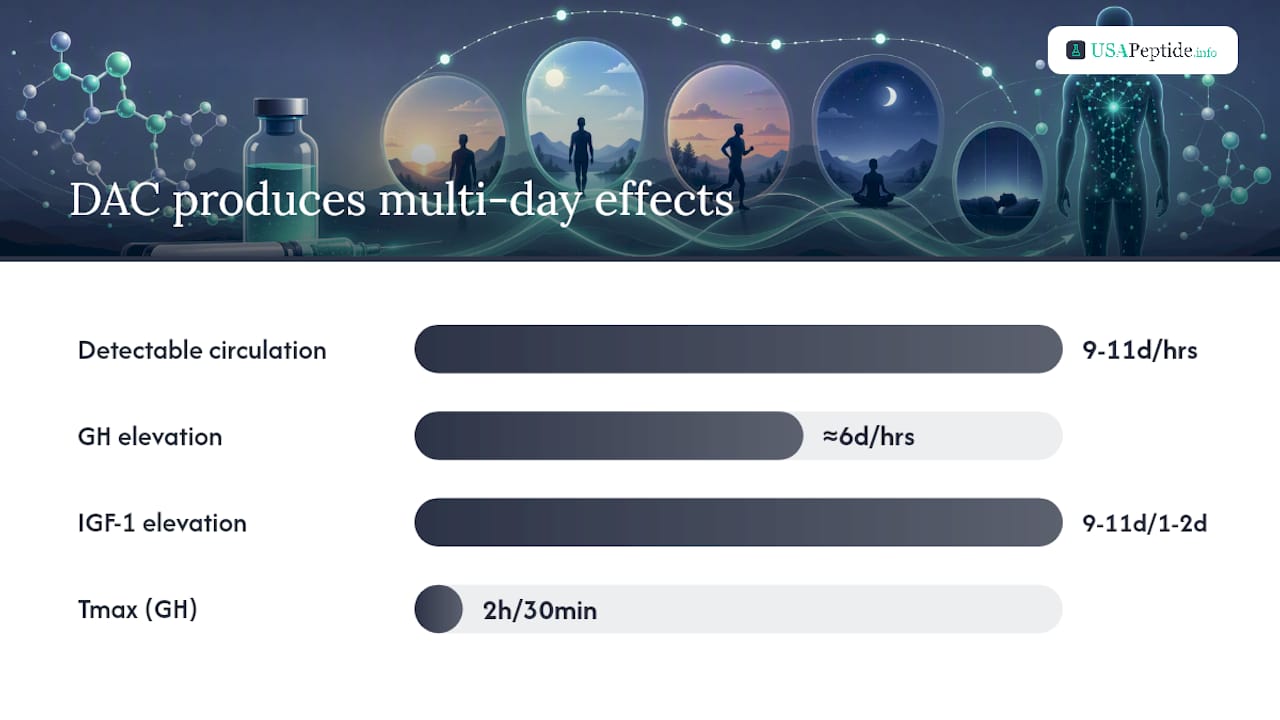
The most cited PK/PD figures come from Teichman et al., whose randomized, double-blind, placebo-controlled ascending-dose trials remain the primary human dataset for the DAC form. Single subcutaneous doses produced GH elevations that persisted for approximately 6 days and IGF-1 elevations that persisted for approximately 9–11 days. With repeated weekly or biweekly dosing, IGF-1 remained above baseline for up to 28 days, suggesting cumulative axis activation.
The table below summarizes the key PK/PD parameters from the available human trial data.
| Parameter | DAC Form | No-DAC Form |
|---|---|---|
| Estimated half-life | multiple days | about 30 minutes |
| Detectable circulation | Up to 9–11 days | Hours |
| GH elevation duration | ~6 days | Hours (pulse) |
| IGF-1 elevation duration | over a week | Hours to 1–2 days |
| Tmax (GH peak) | around 2 hours post-injection | approximately 30 minutes |
| Typical dosing interval | Approximately weekly or biweekly | Multiple daily injections |
Sampling implications follow directly from these figures. For peak GH measurement, blood should be drawn approximately 2 hours after injection. Trough sampling for IGF-1 is most informative at 7 days post-dose when using weekly protocols. Researchers planning pulsatility assessments require intensive overnight sampling (discussed in the methods section below), not single time-point draws.
What do clinical trials show about CJC-1295 efficacy and safety?
Teichman et al. 2006 (primary human PK/PD trial)
The Teichman study enrolled healthy adults aged 21–61 years across two trial periods of 28 and 49 days. The design was randomized, placebo-controlled, and double-blind, with ascending single and multiple subcutaneous doses. Primary endpoints were PK parameters (AUC, Cmax, t½) and PD markers (plasma GH and IGF-1). No serious adverse events were reported during the study period. Mild adverse events included injection-site reactions, headache, diarrhea, and flushing; transient mild hypotension appeared at higher doses.
Pulsatility study (Ionescu & Frohman 2006)
A separate study using overnight 12-hour intensive sampling at 20-minute intervals in healthy men aged 20–40 years examined GH secretory dynamics one week after a single injection of 60 or 90 mcg/kg CJC-1295. GH pulsatility was preserved — pulse frequency and amplitude remained intact — while basal (trough) GH rose markedly. Mean GH and IGF-1 levels were notably higher at one week compared to pre-injection baselines. This finding distinguishes CJC-1295 DAC from exogenous GH administration, which suppresses endogenous pulsatility.
Preclinical supportive evidence
Once-daily CJC-1295 in GHRH-knockout mice normalized growth parameters, providing translational rationale for the compound's mechanism. This preclinical work supports biological plausibility but does not substitute for human clinical-outcome data.
| Study | Design | Population | Key Result |
|---|---|---|---|
| Teichman et al. 2006 | RCT, double-blind, placebo-controlled | Healthy adults, 21–61 yr | GH 2–10×; IGF-1 1.5–3×; t½ multiple days |
| Ionescu & Frohman 2006 | Single-dose, intensive sampling | Healthy men, 20–40 yr | Pulsatility preserved; trough GH ~7.5× |
| GHRH-KO mouse study | Preclinical, once-daily dosing | GHRH-knockout mice | Growth normalization |
Limitations of the clinical record:
- Small sample sizes across all human trials
- Study durations of 28–49 days; no long-term safety or efficacy data
- Endpoints limited to hormone levels, not clinical outcomes (body composition, bone density, metabolic markers)
- Healthy adult populations only; no data in GH-deficient patients, older adults, or special populations
- No head-to-head comparison with FDA-approved GHRH analogs such as tesamorelin
What adverse events and safety signals have been reported?
Short-term trials reported a mild adverse event profile. No serious adverse reactions were documented across the available study periods.
Reported adverse events in human trials:
- Injection-site reactions (erythema, pain, swelling)
- Headache
- Diarrhea
- Flushing
- Transient mild hypotension at higher doses
Lab signals and metabolic considerations:
Trials monitored glucose tolerance markers and screened for edema and arthralgias, both of which are commonly observed with supraphysiologic exogenous GH. Neither was observed in the short CJC-1295 study windows. The theoretical metabolic concern with sustained GH elevation is insulin resistance, given GH's counter-regulatory effects on glucose metabolism. This has not been demonstrated in the available CJC-1295 data, but the study durations are too short to rule it out.
Long-term unknowns:
No trial has assessed safety beyond 49 days. There are no clinical-outcome safety data, no oncologic surveillance data, and no data in populations with pre-existing metabolic disease. These gaps are the most significant limitation of the current safety record.
Pro Tip: For early-phase human studies, a practical monitoring panel includes fasting glucose and HbA1c, fasting lipid panel, serum IGF-1, and basic electrolytes at baseline, at the midpoint, and at study end. Pre-specify stopping rules for IGF-1 exceeding the age-adjusted upper limit of normal, fasting glucose above 126 mg/dL on two consecutive measures, or any grade 2 or higher adverse event by CTCAE criteria.
Which research methods and biomarkers matter most for CJC-1295 studies?
GH pulsatility sampling
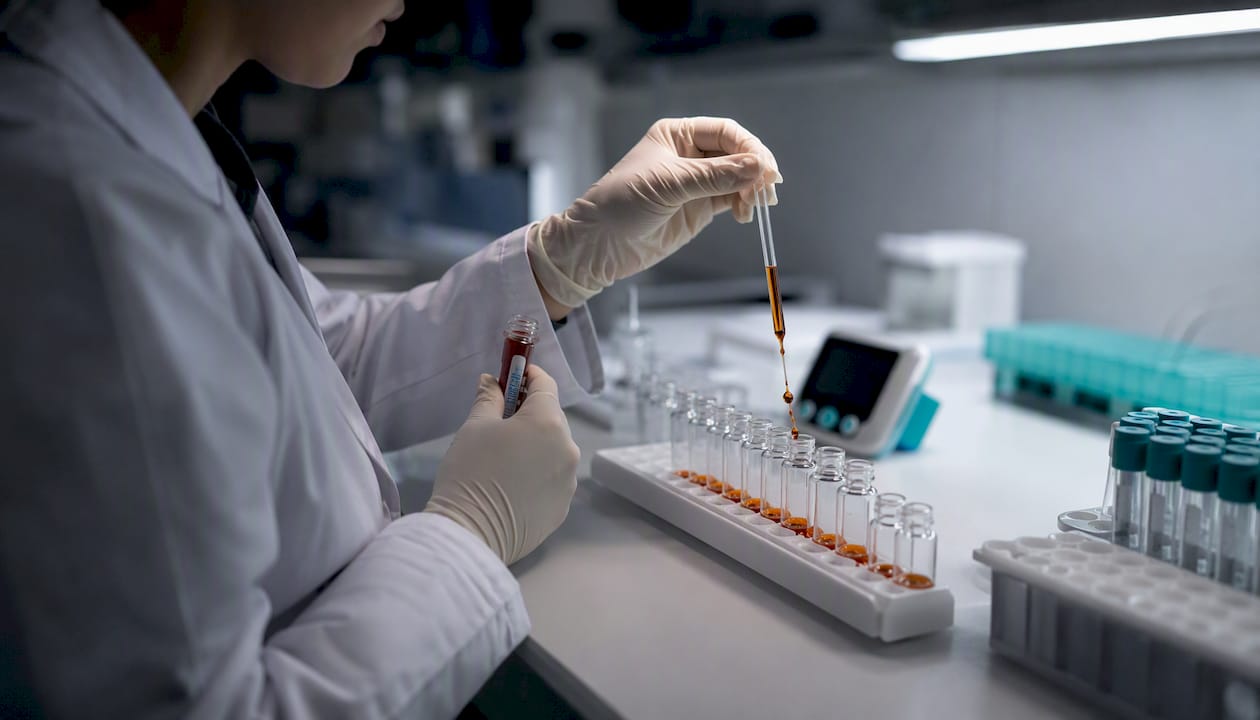
The pulsatility study design used 20-minute sampling intervals across a 12-hour overnight window. This resolution is necessary to detect GH pulse frequency and amplitude reliably; single time-point or infrequent sampling will miss pulses entirely and mischaracterize the secretory pattern. Researchers planning pulsatility assessments should use validated deconvolution algorithms (such as those applied in the Ionescu & Frohman study) to distinguish pulses from baseline noise.
GH and IGF-1 assay requirements
Assay selection directly affects data comparability across studies. Key considerations:
- GH assay: Use a two-site immunoassay calibrated to the WHO 98/574 recombinant standard; sensitivity should be ≤0.05 ng/mL to capture trough values; report inter-assay CV
- IGF-1 assay: Acid-ethanol extraction to remove binding proteins before immunoassay; standardize to WHO 02/254; a single daily morning sample is acceptable for trough IGF-1 given its longer half-life
- Reporting units: Standardize to ng/mL or nmol/L and state the conversion factor used; mixed units across sites are a common source of apparent discrepancies in the literature
Proteomics endpoints
Sackmann-Sala et al. and related studies used serum proteomics to identify protein profile shifts one week after GH/IGF-1 axis activation by CJC-1295. These analyses identified candidate biomarkers beyond GH and IGF-1 that may reflect downstream metabolic and anabolic effects. Proteomics endpoints add mechanistic depth but require careful pre-analytical standardization (consistent fasting state, sample handling, freeze-thaw cycles) to minimize noise.
For molecular reference and registry data relevant to assay design and QC, PubChem's compound page for CJC-1295 provides structural identifiers, molecular weight, and canonical synonyms.
| Biomarker | Recommended Sampling Timing | Analytical Considerations |
|---|---|---|
| GH (pulsatility) | Every 20 min overnight, 12 h | Two-site immunoassay; WHO 98/574 calibration; CV <10% |
| GH (peak/trough) | ~2 h post-dose (peak); day 7 (trough) | Same assay as pulsatility; single draw acceptable |
| IGF-1 | Morning fasting, single daily draw | Acid-ethanol extraction; WHO 02/254 standard |
| Fasting glucose | Baseline, midpoint, end of study | Standard clinical chemistry |
| Serum proteomics | Day 7 post-dose | Consistent fasting state; minimize freeze-thaw cycles |
What is the U.S. regulatory and ethical context for CJC-1295 research?
Neither the DAC nor the no-DAC form of CJC-1295 holds FDA approval for any indication. Both are classified as research compounds. Any human study in the United States requires Institutional Review Board (IRB) review and, depending on the study design, an Investigational New Drug (IND) application to the FDA under 21 CFR Part 312.
Core IRB and protocol requirements for CJC-1295 human studies:
- Investigational product labeling compliant with 21 CFR 312.6, including lot number, storage conditions, and "For Investigational Use Only" designation
- Informed consent disclosing the absence of long-term safety data, the experimental nature of GH axis manipulation, and the monitoring plan
- A pre-specified monitoring plan covering the biomarker panel described above and stopping rules for adverse events
- Documentation of compound quality: Certificate of Analysis (COA) confirming identity by mass spectrometry, purity by HPLC (≥99%), and endotoxin limits
- ISO 17025 laboratory accreditation for the testing facility that issued the COA
Compounding and sourcing concerns:
FDA guidance on research peptides emphasizes that compounds used in human studies must meet current Good Manufacturing Practice (cGMP) standards or, for IND studies, the quality standards specified in the IND. Impurities in research-grade peptides are a documented source of adverse events in uncontrolled settings. Investigators should require COAs from ISO 17025-accredited labs and retain copies in the study file.
Practical checklist for protocol submissions:
- Confirm IRB classification (exempt, expedited, or full board) based on risk level
- Include a pharmacovigilance plan with defined reporting timelines for serious adverse events (SAEs) to the FDA (MedWatch) and IRB
- Specify the assay lab, standardization method, and reference ranges for all PD endpoints
- Address the theoretical risk of receptor desensitization in the risk-benefit section of the consent form
How should researchers approach sourcing, quality assurance, and dosing?
Verifying a peptide vendor
The most consequential pre-study decision is vendor selection. A COA from an ISO 17025-accredited laboratory is the minimum standard; it confirms that the testing facility operates under a validated quality management system.
Quality assurance checklist for incoming material:
- Identity: mass spectrometry confirming molecular weight and sequence
- Purity: HPLC ≥99%; report the method and column used
- Endotoxin: LAL assay result in EU/mg; confirm it meets protocol limits
- Storage: cold-chain documentation from manufacture to receipt; lyophilized powder stored at -20°C
- Expiration: confirm dating and record in the study file
Dosing calculations and administration
CJC-1295 DAC is typically supplied as a lyophilized powder in vials. Reconstitution with bacteriostatic water is standard; the volume used determines the concentration and therefore the injection volume per dose. Researchers should calculate doses in micrograms per kilogram (mcg/kg) based on subject body weight, consistent with the Teichman trial design, and document the calculation in the case report form. Duplicate sample storage (two aliquots per time point, stored separately) protects against sample loss.
Pro Tip: Upload the COA to the study file at the time of material receipt, not retrospectively. Centralize all GH and IGF-1 assays at a single laboratory for the entire study to eliminate inter-lab variability as a confound. The USAPeptide COA verification tool provides a structured framework for evaluating COA legitimacy before material enters the study.
For a comprehensive CJC-1295 peptide reference including molecular profile, PK/PD summaries, and sourcing guidance, USAPeptide maintains a dedicated compound page updated with current research.
The USAPeptide Team's perspective on CJC-1295 research
The most common mistake in interpreting CJC-1295 studies is treating the PK/PD record as clinical evidence. It is not. Teichman et al. measured hormone levels in healthy adults for 28–49 days. That is a well-executed pharmacology study, and it tells researchers exactly what it should: the compound reaches albumin, circulates for days, and drives GH and IGF-1 upward in a dose-dependent way. What it does not tell anyone is whether sustained GH/IGF-1 elevation over months produces meaningful changes in body composition, metabolic health, or any other outcome a clinician or patient would actually care about.
The DAC vs. no-DAC distinction matters more operationally than it does scientifically. Researchers who choose the DAC form for convenience — weekly dosing, sustained IGF-1 — are making a practical decision, not a pharmacologically superior one. The no-DAC form produces a physiologic pulse pattern that may be more appropriate for certain research questions, particularly those examining GH secretory dynamics or acute anabolic signaling. Neither form has comparative outcome data. Framing one as categorically better than the other is premature.
The receptor desensitization question is the most underappreciated gap in this literature. Short-term trials did not observe it, but 28–49 days is not long enough to characterize receptor regulation under sustained stimulation. Any investigator designing a longer-duration study should build in pulsatility assessments at multiple time points, not just at baseline and endpoint, to detect any attenuation of response over time.
USAPeptide's position is straightforward: this is a research compound with a narrow but honest evidence base. Use the PK/PD data for what it is, design studies with appropriate endpoints and monitoring, and do not extrapolate beyond what the trials actually measured.
Research-grade CJC-1295 resources from USAPeptide
Qualified U.S. researchers planning CJC-1295 studies need more than a literature summary. They need verified compounds, structured COA review, and a reliable molecular reference. USAPeptide addresses each of those needs directly.

The platform's COA verification tool walks investigators through a structured assessment of Certificate of Analysis legitimacy, covering identity, purity, endotoxin, and accreditation criteria. The CJC-1295 compound reference page consolidates molecular data, PK/PD summaries, and sourcing guidance in one place. For researchers studying GH-axis peptides alongside tissue-repair or recovery endpoints, the peptide research reference platform provides compound profiles across the full range of research-grade peptides available to U.S. laboratories. Start with the COA tool before any material enters your study protocol.
This article is general information, not a substitute for advice from a qualified doctor. Consult a qualified healthcare professional about your own circumstances before acting on anything here.
Sources
The following peer-reviewed studies and reference resources are the primary sources for the evidence summarized in this article. Reading order depends on your immediate goal.
For PK/PD planning and trial design:
- Prolonged stimulation of growth hormone (GH) and insulin-like growth factor I secretion by CJC-1295, a long-acting analog of GH-releasing hormone, in healthy adults
- Pulsatile secretion of growth hormone (GH) persists during continuous stimulation by CJC-1295, a long-acting GH-releasing hormone analog
- Once-daily administration of CJC-1295, a long-acting growth hormone-releasing hormone (GHRH) analog, normalizes growth in the GHRH knockout mouse
- Prolonged Stimulation of Growth Hormone (GH) and Insulin-Like Growth Factor I Secretion by CJC-1295, a Long-Acting Analog of GH-Releasing Hormone, in Healthy Adults (Teichman et al. PDF)
- Pubchem
For pulsatility methods and GH secretory dynamics:
For preclinical translational context:
For proteomics and downstream biomarker endpoints:
For molecular and structural reference: