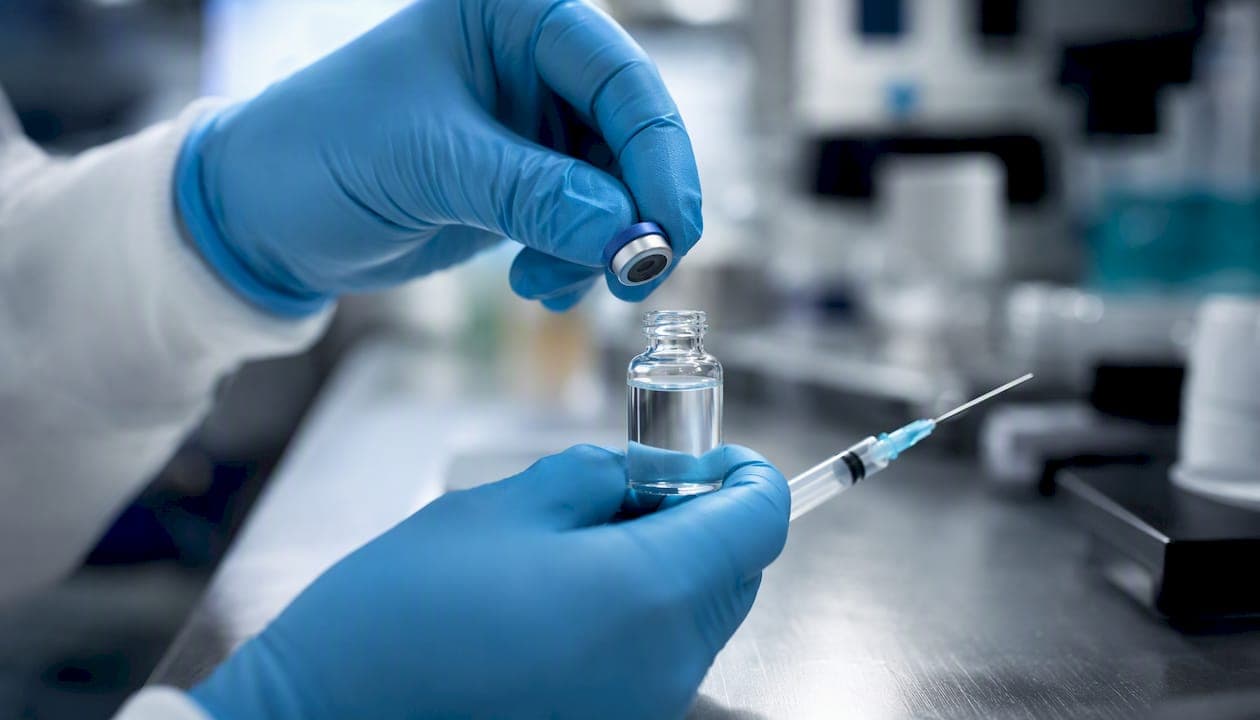
The single most important difference between these two diluents is the preservative: bacteriostatic water contains benzyl alcohol, and sterile water contains none. That distinction drives everything else, including which one belongs in a multi-dose vial and which one gets used once and discarded.
If you're reconstituting a peptide or medication that will be accessed more than once, bacteriostatic water for injection is usually the right call, provided the compound and the patient population tolerate benzyl alcohol. If you're preparing a single dose for immediate use, or the protocol calls for preservative-free handling, sterile water is the correct choice. Neither decision should be made without checking the solute's label and, in clinical settings, without confirming the plan with a prescriber or pharmacist. Benzyl alcohol carries a specific, well-documented contraindication in neonates, and that single fact should override convenience every time.
- Bacteriostatic water: contains benzyl alcohol, supports repeated withdrawals, common for multi-dose peptide vials.
- Sterile water: no preservative, intended for single-use or preservative-free protocols.
- Safety first: always confirm compatibility against the product label before mixing anything.
Pro Tip: Keep both diluents on hand if your lab works with a range of compounds. Some peptides tolerate benzyl alcohol fine over weeks; others degrade faster with it. The label and the Certificate of Analysis (COA) should guide the choice, not habit.
Key Takeaways
Bacteriostatic water contains benzyl alcohol for multi-dose use, while sterile water has no preservative and is intended for single-use preparations only.
| Point | Details |
|---|---|
| Composition distinction | Bacteriostatic water contains 0.9% or 1.1% benzyl alcohol; sterile water contains no preservative at all. |
| Choose by use case | Use bacteriostatic water for repeated vial access; use sterile water for single-use or preservative-free protocols. |
| Primary contraindication | Benzyl alcohol is not for use in neonates due to documented gasping syndrome risk. |
| Storage window matters | Bacteriostatic preparations may last up to 28 days refrigerated; sterile water is generally single-day use. |
| Verify before you buy | USAPeptide's COA check and dosage calculator help confirm supplier claims and reconstitution math. |
Table of Contents
- Bacteriostatic Water vs Sterile Water: What Is BWFI?
- What Is Sterile Water for Injection (SWFI)?
- Bacteriostatic Water vs Sterile Water: Key Differences at a Glance
- How to Choose Between Bacteriostatic and Sterile Water
- How to Reconstitute a Lyophilized Peptide Safely
- Storage and Shelf Life After the Vial Is Punctured
- Safety Notes, Contraindications, and Compatibility Cautions
- Where to Source Bacteriostatic and Sterile Water
- How Researchers Should Actually Weigh This Decision
- How USAPeptide Supports Safer Reconstitution Planning
- Sources
Bacteriostatic Water vs Sterile Water: What Is BWFI?
Bacteriostatic Water for Injection (BWFI) is sterile, pyrogen-tested water with a preservative added specifically to inhibit bacterial growth between uses. That preservative is benzyl alcohol, and its concentration is standardized rather than arbitrary.
According to DailyMed's labeling data, USP-grade bacteriostatic water contains either 0.9% (9 mg/mL) or 1.1% (11 mg/mL) benzyl alcohol, with a pH typically around 5.7, ranging from 4.5 to 7.0. It's packaged in multiple-dose containers, which is the whole point: the preservative lets you puncture the vial repeatedly without introducing runaway microbial growth each time.
When you're scanning a vial label or a supplier's COA, look for these markers:
- The word "bacteriostatic" printed on the label, not just "water for injection."
- The exact benzyl alcohol concentration (0.9% or 1.1%), stated explicitly.
- Confirmation of sterility and endotoxin testing, usually referenced as pyrogen-free.
- A multi-dose container designation, distinguishing it from single-dose vials.
Benzyl alcohol at 0.9% translates to 9 milligrams per milliliter, a concentration set by USP standards rather than manufacturer discretion. That consistency matters for researchers comparing suppliers. A COA that omits the benzyl alcohol percentage or lists a nonstandard figure is a signal to ask questions before you buy. USAPeptide's research glossary breaks down terms like "pyrogen-free" and "lyophilized" if you're cross-referencing supplier documentation for the first time.
What Is Sterile Water for Injection (SWFI)?
Sterile Water for Injection is exactly what the name implies: sterile, pyrogen-tested water with nothing added. No benzyl alcohol, no antimicrobial agent, no buffer.
That absence of preservative is the entire reason SWFI exists as a distinct product. Without an antimicrobial component, there's nothing stopping bacterial growth once the vial is punctured, so SWFI is manufactured and labeled for single-dose use. Composition-wise, it's simple:
- Water for injection, meeting USP sterility and endotoxin standards.
- No bacteriostat, no buffer, no added antimicrobial agent.
- Typically packaged in single-dose vials or ampules.
Practically, this means you draw what you need and use it immediately. Unless the product's specific label says otherwise, any leftover SWFI should be discarded rather than stored for a second use. There's no preservative doing the work of keeping it safe past that first puncture.
One detail that surprises people new to injectable prep: neither SWFI nor bacteriostatic water is isotonic as supplied. Both carry label warnings about tonicity, and admixtures intended for intravenous use generally need to be brought closer to isotonic before injection, a point echoed in supplier guidance on tonicity differences between preserved and unpreserved diluents. Water alone, bacteriostatic or not, is hypotonic. The solute and the final preparation dictate whether further adjustment is needed, so always defer to the compound's specific reconstitution instructions.

Bacteriostatic Water vs Sterile Water: Key Differences at a Glance
The two diluents look identical in the vial. Everything that matters is chemical and procedural, not visual.
| Factor | Bacteriostatic Water (BWFI) | Sterile Water (SWFI) |
|---|---|---|
| Preservative | Benzyl alcohol, 0.9% or 1.1% | None |
| Intended handling | Multiple-dose container | Single-dose, discard after use |
| Typical opened-vial window | Often used up to about four weeks when refrigerated with aseptic technique | Same-day use only, unless label states otherwise |
| Tonicity | Hypotonic as supplied; not isotonic | Hypotonic as supplied; not isotonic |
| Common applications | Peptide reconstitution, multi-dose injectables | Single-use dilution, preservative-sensitive preparations |
| Key contraindication | Not for use in neonates (benzyl alcohol) | Preferred where preservative-free handling is required |
For multi-dose peptide reconstitution where the compound tolerates a preservative, bacteriostatic water is the practical default. For single-use protocols, neonatal or pediatric contexts, or compounds explicitly labeled preservative-free, sterile water is the only appropriate option.
Common applications split cleanly along these lines:
- Reconstituting lyophilized research peptides intended for repeated withdrawal over days or weeks.
- Diluting sterile powders for a single, immediate administration.
- Preparing injectable solutions where the solute's own instructions specify a preservative-free diluent.
How to Choose Between Bacteriostatic and Sterile Water
Selecting the right diluent comes down to three questions, in this order.
- Will the vial be accessed more than once? If yes, and the compound tolerates a preservative, bacteriostatic water is generally preferred for practicality and reduced waste.
- Is benzyl alcohol acceptable for this compound and this patient population? Some peptides show accelerated oxidation of methionine or cysteine residues in the presence of benzyl alcohol over extended storage, a nuance worth checking against the peptide's own stability data before extending storage windows.
- Does the solute's label explicitly require a preservative-free diluent? If so, sterile water is mandatory regardless of how many withdrawals are planned.
Certain situations override the multi-dose convenience argument entirely:
- Neonatal or pediatric use, where benzyl alcohol is contraindicated outright.
- Documented benzyl alcohol hypersensitivity in the patient or research protocol.
- Peptides known to be sensitive to oxidation at methionine or cysteine residues.
- Any product whose label specifically calls for a preservative-free diluent.
Pro Tip: When in doubt, treat the compound label as the final word, not the diluent's convenience. A preservative that extends usable life by weeks is worthless if it degrades the very molecule you're trying to study. Always confirm diluent selection with the prescriber, pharmacist, or protocol lead before proceeding, particularly in clinical or patient-facing contexts.
How to Reconstitute a Lyophilized Peptide Safely
The short answer: use aseptic technique throughout, select the diluent based on the compound's label and clinical guidance, then follow a consistent stepwise process every time.
- Wipe the stopper of both the lyophilized peptide vial and the diluent vial with an alcohol swab, and let it dry.
- Draw the correct volume of diluent into a sterile syringe. Many research protocols use 1 to 3 mL as a common range, which pharmacy-based reconstitution guides note keeps the resulting concentration easy to measure accurately.
- Insert the needle and inject the diluent slowly down the interior wall of the vial rather than directly onto the lyophilized powder.
- Swirl the vial gently to mix. Do not shake it. Shaking can denature or aggregate peptide structures.
- Visually confirm full dissolution. The solution should appear clear, with no visible particulate or cloudiness.
- Label the vial immediately with the resulting concentration, the date of reconstitution, and your initials.
- Refrigerate promptly if the compound's instructions call for cold storage, and protect from light where specified.
A few mistakes show up repeatedly in lab settings. Using tap water or plain distilled water instead of water specifically labeled for injection introduces contamination risk and defeats the purpose of aseptic prep. Excessive shaking, rather than gentle swirling, is another common error that can compromise peptide integrity. And skipping the labeling step, even when you're confident you'll remember the concentration, creates real risk once multiple vials accumulate in a shared refrigerator.
Pro Tip: Swirl, don't shake, and give the vial time. Full dissolution can take a minute or two of patient swirling rather than a single vigorous motion. USAPeptide's peptide dosage calculator can help you work through the concentration math conceptually once the vial is reconstituted, so you're not guessing at volume-to-dose conversions on the fly.
Storage and Shelf Life After the Vial Is Punctured
Unopened vials of both diluents hold their manufacturer-stated shelf life under proper storage conditions, typically room temperature and away from light, as specified on the label. The real question researchers ask is what happens after that first puncture.
For bacteriostatic-preserved reconstitutions, many lab protocols treat 28 days as a practical outer limit when the vial is refrigerated and aseptic technique has been maintained throughout, a window supported by common reconstitution practice guides. Sterile water tells a different story: because there's no preservative doing any protective work, SWFI-based preparations are generally treated as single-use, discarded the same day unless the specific product label states an alternative.
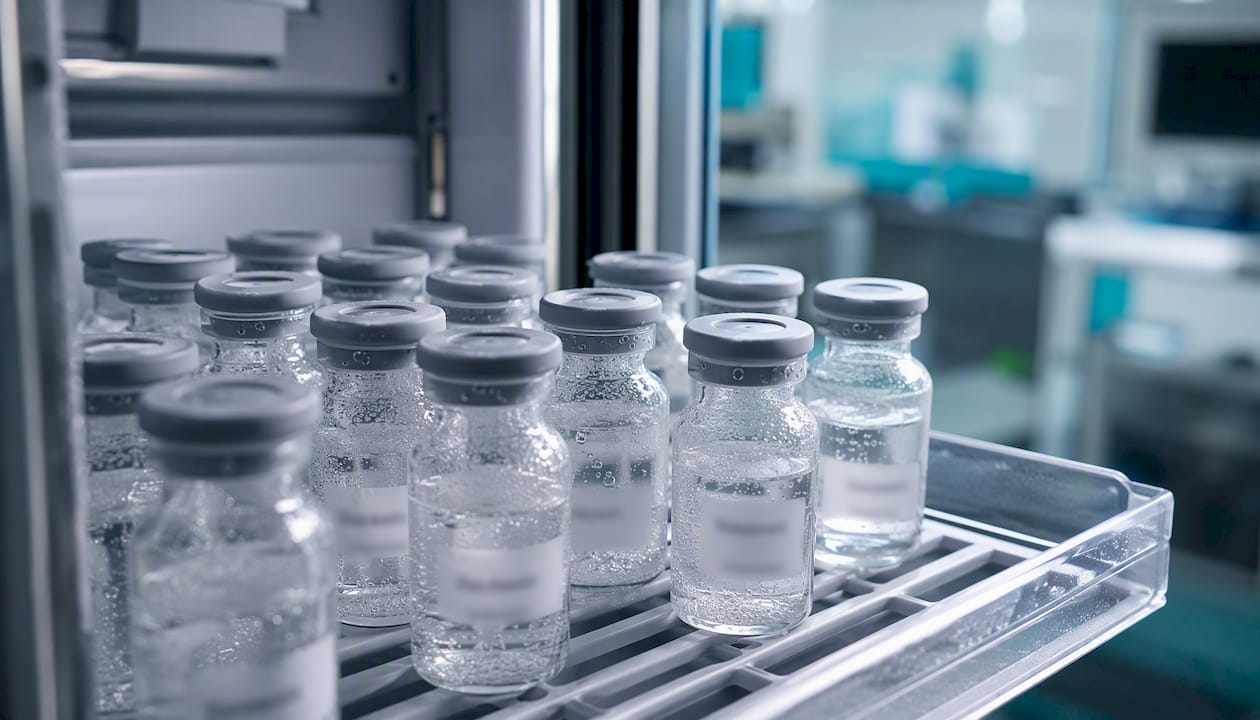
That 28-day figure is a microbiological in-use guideline, not a guarantee of chemical stability. A peptide can remain free of bacterial contamination well past that point while still degrading through oxidation or hydrolysis at a much faster rate. Consulting the peptide's own COA and stability literature before extending any storage window beyond documented guidance is worth the extra five minutes.
Good labeling practice closes the gap between guideline and guesswork:
- Record the date and time of first puncture directly on the vial.
- Add your initials so anyone sharing the refrigerator knows who prepared it.
- Note the storage temperature required, and the calculated discard date.
- Cross-check the discard date against the manufacturer's own instructions or the compound's COA, not just the general 28-day rule of thumb.
Safety Notes, Contraindications, and Compatibility Cautions
The neonatal contraindication for benzyl alcohol is the single most serious safety issue tied to this comparison, and it's not a minor labeling formality.
Benzyl alcohol exposure in preterm and newborn infants has been linked to a cluster of symptoms known as gasping syndrome, a potentially fatal toxicity that led to explicit "NOT FOR USE IN NEONATES" labeling on bacteriostatic water products. Peer-reviewed case analyses documenting this risk are why regulatory guidance treats the contraindication as categorical rather than situational.
Beyond the neonatal warning, a few other cautions deserve attention:
- Documented hypersensitivity to benzyl alcohol rules out bacteriostatic water regardless of the intended use case.
- Some peptides show oxidation at methionine and cysteine residues when stored in benzyl alcohol over extended periods, which can compromise chemical integrity even while the preparation remains microbiologically sound.
- The preservative in bacteriostatic water inhibits growth on an already-sterile vial; it does not sterilize a contaminated one, so aseptic technique remains non-negotiable regardless of which diluent you choose.
- Both SWFI and bacteriostatic water carry tonicity warnings; neither is isotonic as supplied, and IV admixtures typically need adjustment before injection.
Always follow the product label and any applicable local regulatory guidance for the specific compound in use. For patient-specific decisions, consult a clinician or pharmacist rather than relying on general reconstitution guidance alone.
Where to Source Bacteriostatic and Sterile Water
Procurement reality surprises a lot of first-time buyers. Bacteriostatic water is not a shelf item you'll find next to saline solution at a mainstream retail pharmacy.
It's classified as a prescription medical product intended for injection, and supply typically runs through medical distributors, compounding pharmacies, or hospital procurement channels rather than walk-in retail purchase. Sterile water follows a similar pattern, often available in single-dose vials through the same medical supplier networks, though its preservative-free status sometimes makes it easier to source for specific clinical applications.
For research labs, a few procurement habits pay off consistently:
- Work with suppliers who provide a COA for every batch, not just on request.
- Verify sterility testing and the exact benzyl alcohol concentration listed on the COA before ordering.
- Prefer ISO 17025-accredited testing where traceability and identity verification matter for the research protocol.
- Check local pharmacy or supplier policy in advance. Prescription requirements and stocking practices vary, and assuming availability wastes time on a deadline.
How Researchers Should Actually Weigh This Decision
Too many lab discussions treat bacteriostatic versus sterile water as a matter of habit rather than protocol design. That's backwards. The diluent choice should follow directly from what the compound requires and what the research or clinical context demands, not from whatever happens to be sitting in the refrigerator.
Our position is straightforward: default to checking the compound label and the patient or research population before reaching for either bottle. Bacteriostatic water earns its place in multi-dose peptide workflows because it genuinely reduces waste and simplifies repeated access, but that convenience only holds when the compound tolerates benzyl alcohol and the population isn't neonatal or hypersensitive. Sterile water isn't a downgrade. It's the correct, non-negotiable choice whenever preservative-free handling is required, even if that means more frequent reconstitution and more waste.
The bigger risk we see isn't researchers choosing the wrong diluent outright. It's researchers extending storage windows or reusing single-dose preparations based on assumptions rather than the compound's actual stability data. A 28-day in-use guideline for one peptide says nothing about another peptide's oxidation sensitivity. Treat every COA as a source document, not a formality, and never substitute general reconstitution guidance for the specific instructions tied to the compound in front of you.
How USAPeptide Supports Safer Reconstitution Planning
Getting the diluent choice right is only half the equation. Knowing whether the peptide vial itself is what the supplier claims is the other half, and that's where a lot of research budgets quietly go to waste on unverified compounds.

USAPeptide.info gives qualified researchers a way to check both sides at once. The COA verification tool helps you assess whether a supplier's Certificate of Analysis actually holds up, including the purity data and testing standards that should accompany any peptide before it reaches your bench. The peptide dosage calculator takes the guesswork out of concentration math once you've settled on bacteriostatic or sterile water as your diluent, and the research glossary clears up terminology when you're comparing supplier documentation side by side. If you're planning a reconstitution protocol for a specific compound, browsing peptides commonly used in recovery and repair research is a practical starting point for cross-referencing handling requirements.
None of this replaces a prescriber's instructions or a pharmacist's guidance in clinical contexts. USAPeptide.info is built to support laboratory research and informed sourcing decisions, not to provide clinical dosing advice. Start with the COA check tool before your next order to confirm the compound you're buying matches what the label claims.
Sources
The neonatal contraindication and preservative concentration figures in this article come directly from FDA-referenced product labeling, cross-checked against peer-reviewed toxicity reports and established reconstitution practice guides.
- BACTERIOSTATIC WATER for Injection, USP (DailyMed)
- Case reports and analyses of benzyl alcohol toxicity in neonates (PubMed)
- Do you need bacteriostatic water for peptides? (FormBlends)
This article is general information, not a substitute for advice from a qualified doctor. Consult a qualified healthcare professional about your own circumstances before acting on anything here.